American Beautyberry
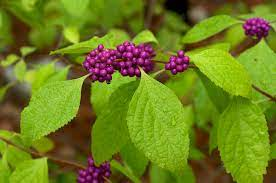
American beautyberry is a native Florida plant with floppy branches covered in bright green leaves.
Plant basics
Growth habit: Shrub
Where it grows in Florida: Whole state (hardiness zones 8a-10b)
Size at maturity: 3-8 feet tall and 4-8 feet wide
Duration: Perennial
Foliage: Deciduous in North Florida and evergreen in South Florida
Sunlight Needs: Full sun or partial shade
Soil Preferences: Grows best in loam soil high in organic matter but also tolerates nutrient-poor sandy soils
Water Needs: Water 1 inch per week when there’s no rain and skip weeks with rainfall
Hazards: Non-toxic and no safety hazards
Azaleas
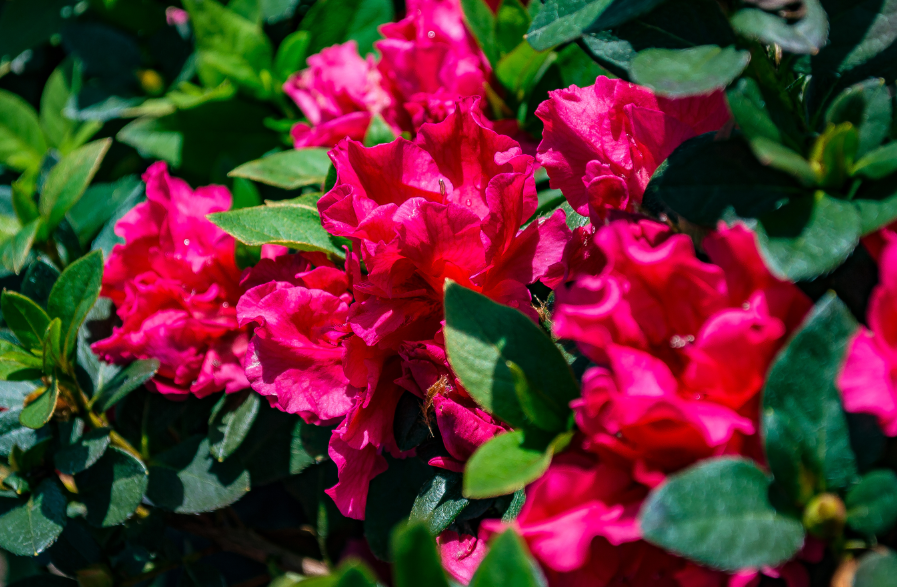
In April or May, these flowering shrubs are absolutely covered with pink or white blossoms, and there are less common varieties available in blue, yellow, red, and other colors. Unfortunately, South Floridians don’t get to enjoy these beauties because they don’t do well in extreme heat.
Plant basics
Growth habit: Shrub
Where it grows in Florida: North and Central (hardiness zones 8a-9b)
Size at maturity: Up to 10 feet tall and 8 feet wide, depending on the species
Duration: Perennial
Foliage: Some species are evergreen and some are deciduous
Sunlight needs: Partial shade
Soil preferences: Acidic soil that drains well
Water needs: Water only when the top few inches of soil dry out (usually two or three times a month in cooler weather and up to twice a week during summer)
Hazards: Toxic to people and pets if ingested
Crape myrtles
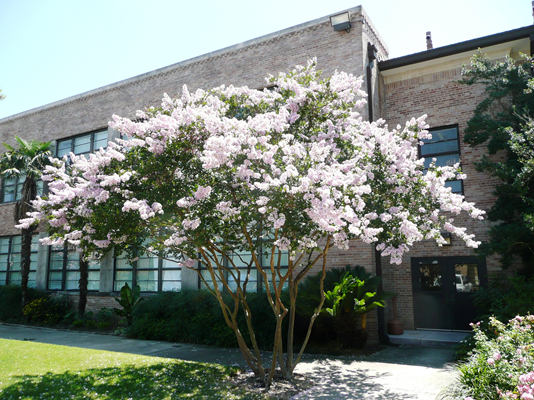
Crape myrtles come in all shapes and sizes because there are many different cultivars, from full-size trees that grow up to 30 feet tall to dwarf varieties that are more like small shrubs. They produce beautiful fluffy-looking flowers that are usually pink but also can be different shades of red, purple, or white. Blooms first appear in July and sometimes stay until the first frost of winter.
Plant basics
Growth habit: Tree or shrub
Where it grows in Florida: Whole state (hardiness zones 8a-10b)
Size at maturity: Anywhere from 2-30 feet tall and 2-15 feet wide depending on the variety
Duration: Perennial
Foliage: Deciduous
Sunlight needs: Full sun
Soil preferences: Tolerates most soil types as long as they have good drainage
Water needs: Water deeply once per week, maybe twice per week in summer if you find the soil dries out quickly
Hazards: Non-toxic and no safety hazards