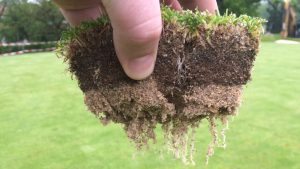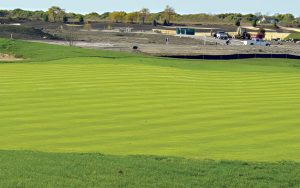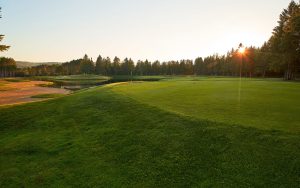
Profile Porous Ceramics (PPC) works unseen, at the root zone of your golf course, to make the most of your maintenance practices. There are many reasons seasoned superintendents swear by Profile.
1. Permanently Improve the Root Zone
Unlike peat and other inferior conditioners that naturally degrade over time, PPC particles retain their structure to permanently enhance the root zone. Even after 20 years of use – long after peat/sand mixes fall out of USGA spec – there is only a 3 percent degradation in Profile/sand mixes, as proven through ASTM-recommended stability tests.
I’ve grown in greens on both straight sand and peat moss. What you get visually with PPC is terrific, not just in year one, but even after year two and three. I wouldn’t go down without a fight trying to convince someone building a new golf course to really look into using Profile.
Eric Bauer, Director of Agronomy, Bluejack National
2. Increase Oxygen Levels at the Root Zone
Profile/sand greens have a greater oxygen-holding capacity than peat/sand greens. Greater oxygen at the root zone aids in the ability to combat localized dry spot, wet greens, compaction, algae, and poor nutrient retention.
3. Lengthen Root Depth
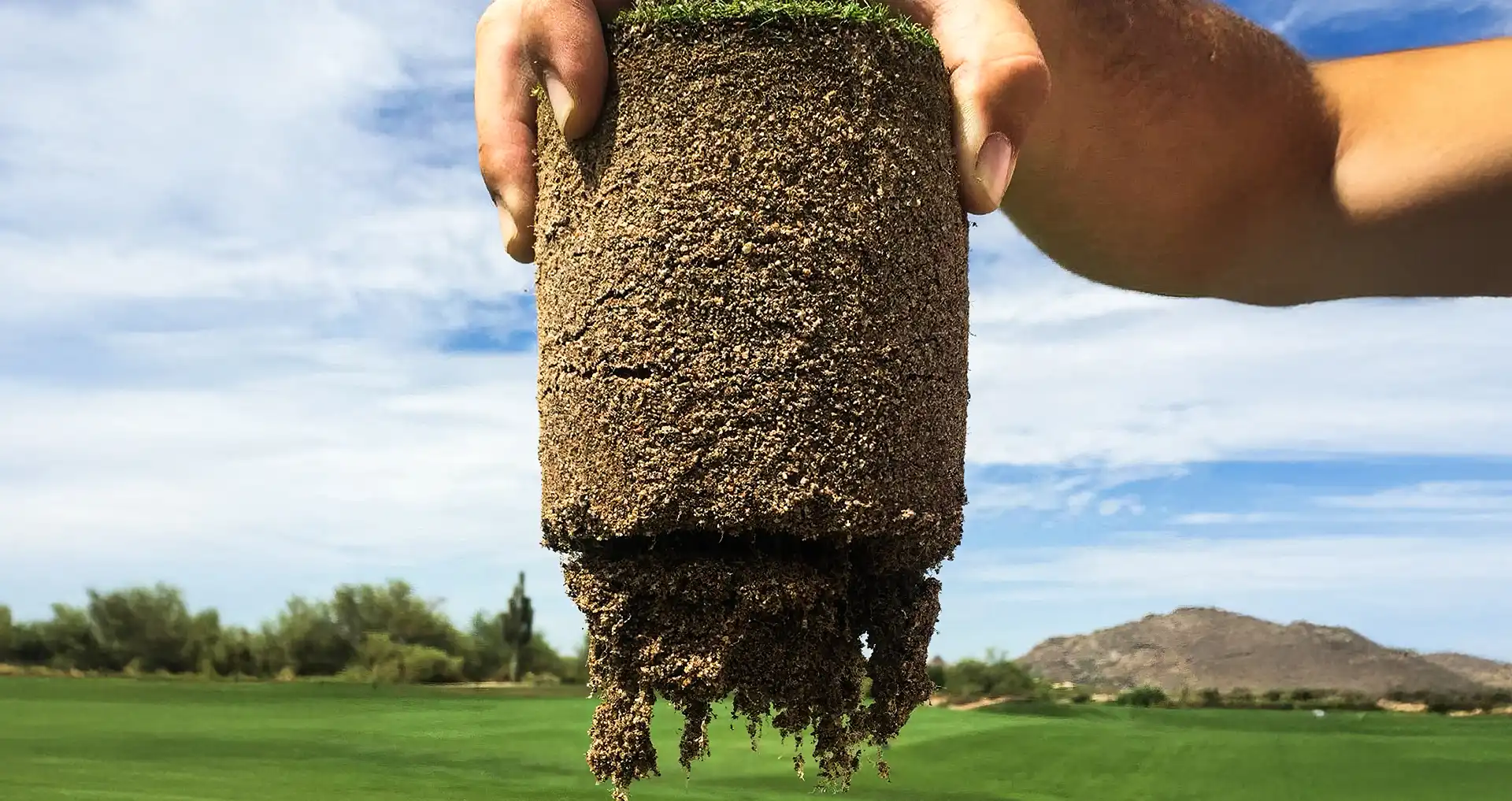
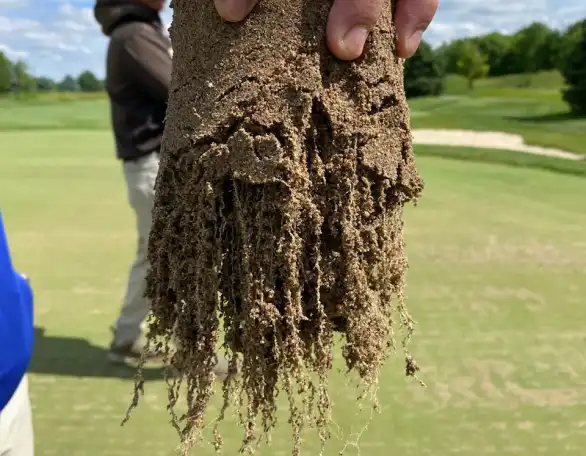
As shown in a study by Dr. Ed McCoy (Ohio State University), “Analysis of Water Flow and Turfgrass Stress,” the increased porosity of 20 percent Profile amended root zone allows roots to grow approximately 2.75 inches deeper than when amended with “Reed Sedge” peat. Deeper roots mean greater resistance to stress.

4. Delay the Onset of Drought Stress
An additional study by Dr. Ed McCoy (Ohio State University), titled “Water Flow in Putting Greens,” shows that Profile blends can delay the onset of drought stress in greens by two days compared to sphagnum peat.
5. Reduce the Need for Hand Watering
Profile retains moisture at the root zone, virtually eliminating the time-intensive chore of hand watering due to a localized dry spot.
Having Profile in my greens mix has really reduced my labor costs in hand watering. We not only see a better air/water balance in our greens but have virtually eliminated the need for hand watering hot spots and high undulations.
Mark Langner, CGCS, Former Director of Agronomy, FarmLinks LLC
6. Reduce Nutrient Leaching
A Profile/sand root zone mix holds on to more fertilizer at the root zone and exchanges nutrients more efficiently than a traditional peat/sand blend. Fewer nutrients leached into the water table means a positive impact on the environment.
Profile retains moisture at the root zone, virtually eliminating the time-intensive chore of hand watering due to a localized dry spot.
We were surprised when our soil test indicated that the nutrient levels are overall much better on our 1-year-old Profile/sand greens versus our 20-year-old sand/peat greens.
Lee McLemore, CGCS, Director of Golf Operations, . The Country Club of Birmingham
7. Increase Potassium Retention
According to Grady Miller of North Carolina State University, adding 10 percent Profile to sand increased potassium concentration by 256 percent in tifdwarf Bermuda tissues. By comparison, “Diatomaceous earth and peat do not adequately retain potassium.”
8. Remove Unwanted Salts
The greater porosity of Profile/sand blends helps maintain better flushing characteristics at the root zone. This makes it much easier to remove unwanted salts from the root zone through standard watering practices.
In our recent research concerning ‘Dissolved Salts in Putting Green Root Zones Containing Inorganic Amendments’ we have noted that Sand-Profile root zone blends have low salinity retention along with good flushing characteristics. This is primarily due to rapid pore space equilibration and the high infiltration rates of these blends.
Dr. Ed McCoy, Ohio State University
9. Save Money on Fertilizer
Using Profile instead of peat as an amendment for sand-based greens gives the root zone a higher CEC value (nutrient-holding capacity) and therefore reduces the amount of costly fertilizer inputs needed to maintain greens.
10. Save On Pesticide Use
Better aeration and air/water-holding capacity at the root zone reduces the pressure on turf that leaves it susceptible to insect or disease damage. Healthier turf means less pesticide use and that translates into greater profitability for you.
As your soil and turf establishment partner, Profile has the products, technology, and experience to help you with your next course remodel or new construction project.