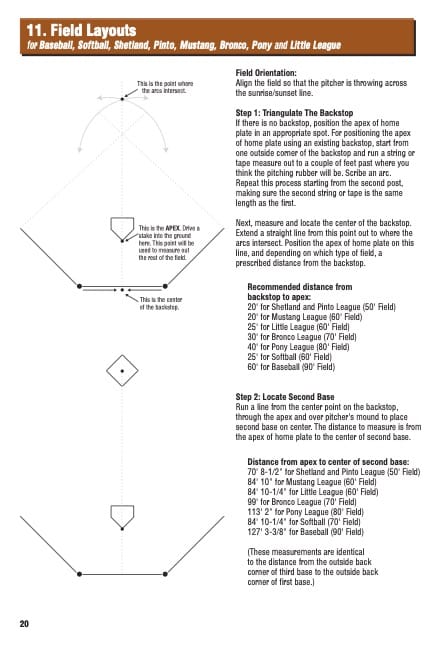
What is the radius of a skinned infield on a high school baseball diamond? What is the proper distance from home plate to second base for high school and adult softball? Those and many more dimensions are listed here for quick and easy reference.
Baseball Field Dimensions
| Measurement | 90’ | 80’ | 70’ | 60’ | 50’ |
|---|---|---|---|---|---|
| Baseline | 90’ | 80’ | 70’ | 60’ | 50’ |
| Home to Second | 127’ 3 3/8” | 113’ 1 5/8” | 99’ | 84’ 10 1/4” | 70’ 8” |
| Home to Front of Rubber | 60’ 6” | 54’ | 48’ | 46’ | 38’ |
| Radius of Skinned Infield | 95’ | 80’ | 65’ | 50’ | 50’ |
| Home Plate to Backstop | 60’ | 40’ | 30’ | 25’ | 20’ |
| Home Plate Circle | 26’ | 24’ | 22’ | 18’ | 20’ |
| Base Cut Out Radius | 13’ | 12’ | 11’ | 9’ | 9’ |
| Dugout Distance From Foul Line | 15’ | 12’ | 9’ | 6’ | 6’ |
| Home Plate to Left Field Distance | 320–350’ | 250’ | 200’ | 175’ | 150’ |
| Home Plate to Center Field Distance | 400’+ | 300’ | 250’ | 225’ | 200’ |
| Pitching Mound Diameter | 18’ | 15’ | 12’ | 10’ | 9’ |
| Pitching Mound Height | 10” | 8” | 6” | 6” | 4” |
Softball Field Dimensions
| Measurement | 65’ | 60’ | 60’ | 55’ |
|---|---|---|---|---|
| Baseline | 65’ | 60’ | 60’ | 55’ |
| Home to Second | 91’ 11” | 84’ 10” | 84’ 10” | 77’ 9” |
| Home to Front of Rubber | 50’ | 43’ | 40’ | 35’ |
| Radius of Skinned Infield | 65’ | 60’ | 60’ | 55’ |
| Home Plate to Backstop | 25’ min | 25’ min | 25’ min | 25’ min |
| Home Plate Circle | Varies | Varies | Varies | Varies |
| Base Cut Out Radius | N/A | N/A | N/A | N/A |
| Coaches Box Distance From Foul Line | 8’ | 8’ | 8’ | 8’ |
| Home Plate to Left Field Distance | 265’ | 190’ | 200’ | 150’ |
| Home Plate to Center Field Distance | 315’ | 220’ | 225’ (HS) / 250’ (Adult) | 175’ |
Tips and Notes: Baseball
Measuring base paths: The starting point is the white tip at the back of home plate (the part pointing to the catcher and backstop). Measure from the tip to the back corner of first base (the corner closest to the foul line and furthest from second base and home.) The next measurement goes from the back corner of first base to the center of second base. Now measure from this point to the back corner of third base, and then back to the original starting point at home plate.
Measuring outfield distances: The outfield fence is measured from the back of home plate, but the arc of the fence is not necessarily measured from any set point on the field. The above chart reflects the measured distance from the back of home plate to left and centerfield.
Measuring base cutouts: The normal diameter for an on-deck batting circle is 5 feet. Base cutouts are measured from the back corner of the base (closest to the foul line, furthest from home). The above chart lists cut out radiuses and recommended distances for dugouts from the foul line.
Measuring pitcher’s mounds: A major league mound is 18 feet in diameter and 10 inches higher than home plate. The pitching rubber is 18 inches back from the center of the mound. The flat area on top of the mound is 5 feet by 34 inches. The 6 inches in front of the pitching rubber is flat, and then begins to grade down one inch per foot. The above chart shows mound diameters and heights for different levels of play.
Tips and Notes: Softball
Softball rules are very clear about base paths and backstop distances. The skinned infield must extend at least 3 feet past the foul line before grass starts and backstops must be a minimum of 25 feet from the back of home plate. The accepted diameter for the pitching area is 16 feet.