Stabilizing silt and ash and restoring vegetation to maintain highway safety
After devastating 2003 wildfires along state highways 118 and 23, Caltrans needed rapid, cost-effective erosion control on 130 acres of steep, ash-covered embankments. Working with Dietz Hydroseeding Company and technical partners, they selected Hydro-Blanket® Bonded Fiber Matrix (BFM) from Profile Products for hydraulic application. The Thermally Refined® wood fiber and multi-dimensional tackifier system delivered high water holding capacity, effective coverage on rocky, uneven slopes, and faster vegetation establishment. Applied in two passes at 2,000 pounds per acre, with seed included in the second pass, Hydro-Blanket stayed intact through multiple heavy rain events, preventing washouts and loss of soil while allowing native plants to grow.
Key Points
- Wildfires left steep highway embankments vulnerable to mudslides, clogged storm drains and unsafe driving conditions along a 15-mile stretch of California 118 and 23.
- Caltrans and project partners chose Hydro-Blanket® BFM for hydraulic application, improved coverage on critical areas, and the ability to keep overall product costs close to the original specification.
- Hydro-Blanket®, made with Thermally Refined® wood and a multi-dimensional tackifier, dries to form a breathable, high-strength blanket with greater water holding capacity and enhanced germination.
- Applied in two coats totaling 2,000 pounds per acre with indigenous native seed in the top layer, the BFM withstood five or six rain events, including more than four inches in 24 hours, with clear-water runoff, no washouts and no loss of soil.
Situation
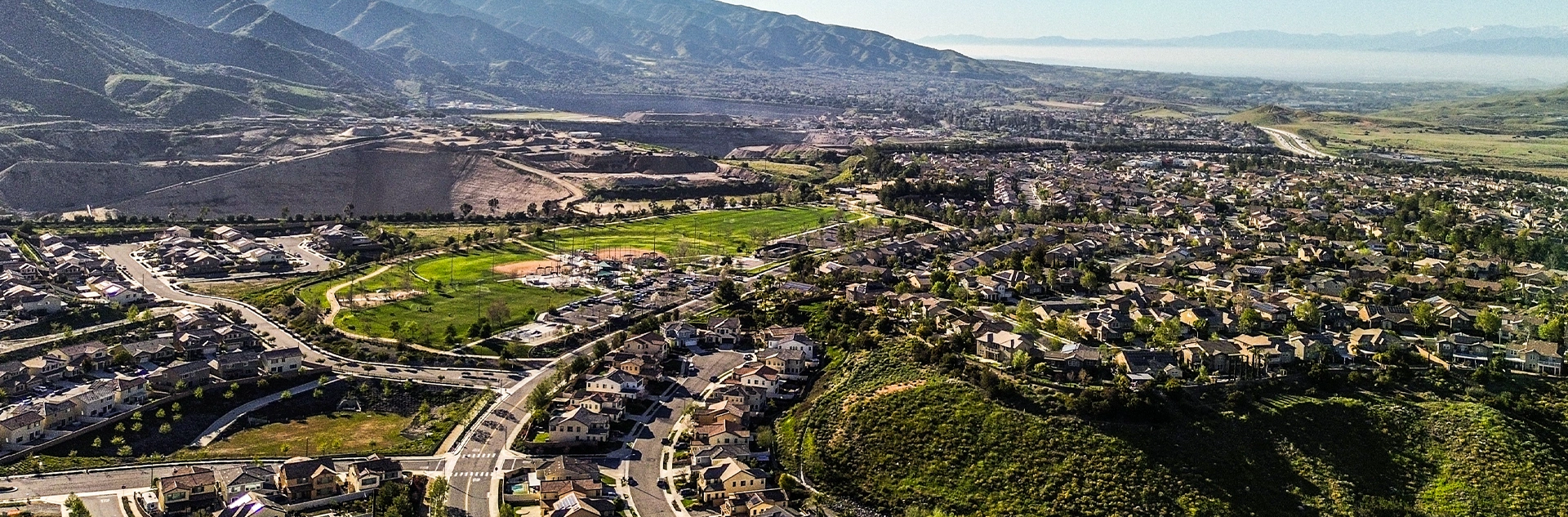
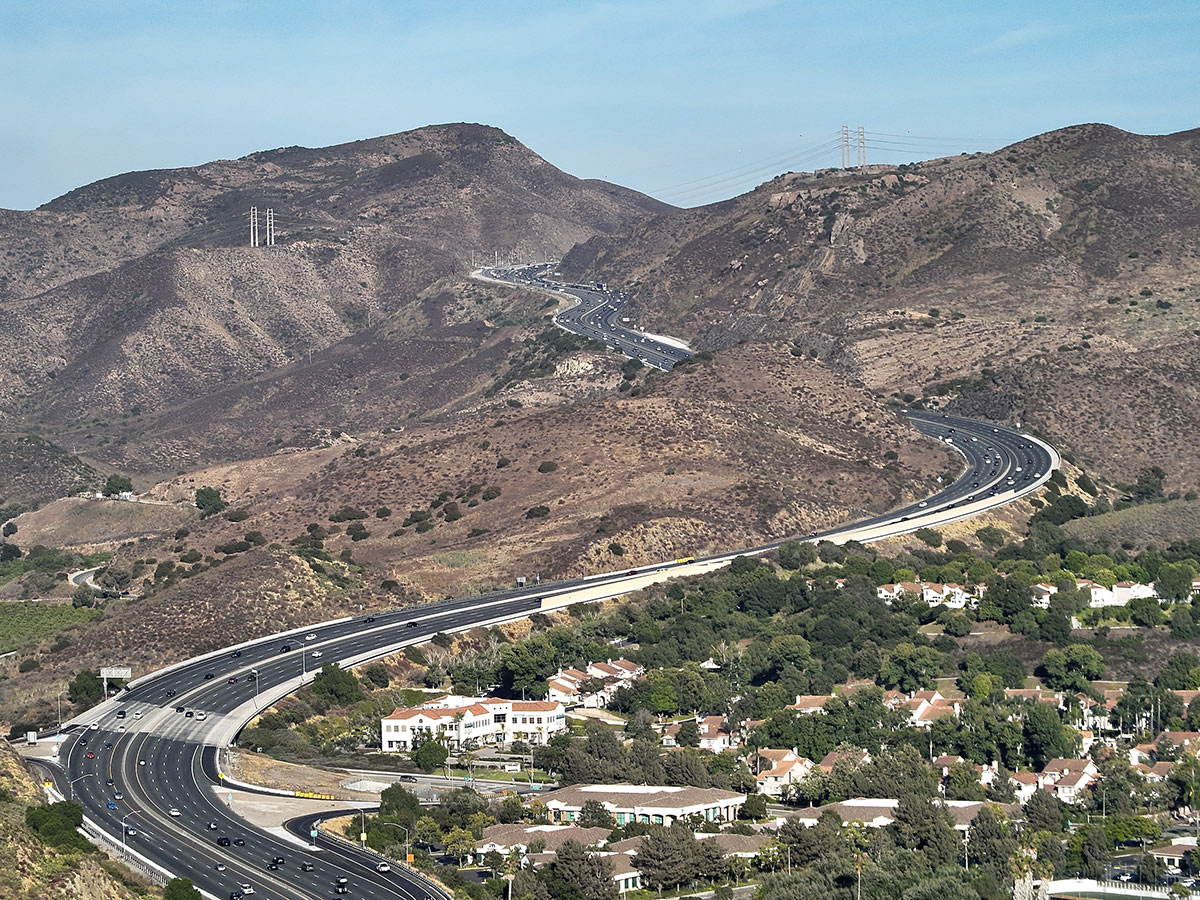
During the fall of 2003, wildfires devastated the steep embankments and hillsides along state highways 118 and 23 between Simi Valley and Moorpark in Ventura County, and Chatsworth in western Los Angeles County. The fire destroyed the native plants, grasses and trees that had dominated the landscape and left behind a thick blanket of ash and silt.
This raised a host of concerns with Caltrans, California’s Department of Transportation— not the least of which was how to keep the highways open and safe in the event of significant rainfall and/or Santa Ana winds. Fast action was essential and Caltrans commissioned Dietz Hydroseeding Company to develop a plan for keeping the ash and silt in place while reestablishing vegetation.
Problem
“It was a massive undertaking,” said Ron Dietz, president of Dietz Hydroseeding. “We had 130 acres to cover along a 15-mile stretch. We knew we had to work fast because there were a lot of steep embankments where sediment was susceptible to being swept away by winter rains. This could have easily caused mudslides, clogged storm drains and created unsafe driving conditions.”
Since California 118 is an artery for commuters, Dietz said it was critical to achieve quick, effective stabilization to minimize the effect of any rain event and to lessen the impact on traffic flow. “Otherwise,” he said, “we were looking at an accident—or a lot of accidents—waiting to happen. This made it critical to meet the challenge of finding a product that combined efficiency, cost effectiveness, accessibility—and could be applied rapidly.”
Alternatives
Dietz, Caltrans officials, U.S. Fish and Wildlife, the U.S. Army Corps of Engineers, and soil and geological experts from Cal Poly San Louis Obispo University considered a variety of erosion control products. The size of the project and the speed required made it important to use a material which could be hydraulically applied. Wood fiber hydraulic mulch with a tackifing agent was originally specified for the job. However, further consultation with PROFILE Products LLC helped the group better understand how a BFM could be applied at different rates to achieve better overall performance while keeping close to the original price point. Applied at a normal application rate, the BFM would provide more effective coverage because of its ability to mix with and anchor to the soil on rocky, uneven terrain in critical areas. Lower rates of application in non-critical areas would provide adequate protection while keeping the overall product cost down.
Key Product Properties
Hydro-Blanket® Bonded Fiber Matrix
Tests prove Hydro-Blanket controls erosion more completely than competitive BFMs on steep 1:1 sites subject to heavy rains.
- Fast, effective hydraulic application on the steepest sites
- Provides a better yield and more cost-efficient coverage than other BFMs.
- Less expensive and faster to install when compared with blankets or sod.
- Combines Thermally Refined® wood and multi-dimensional tackifier to achieve greater water holding capacity and promote more complete germination and faster vegetation establishment.
- Uses a cross-linked hydro-colloid tackifier, super-absorbent co-polymer gel and poly-acrylamide to securely anchor the fiber mulch matrix to the soil surface.
- Dries to form a breathable, high-strength blanket which is environmentally safe and fully biodegradable.
Typical application rate/acre
< 3:1 slope 3000 lbs
2:1 slope 3500 lbs
1:1 slope 4000 lbs
Solution
After reviewing the characteristics and availability of the BFM, Dietz chose Hydro-Blanket®. The BFM manufactured by Profile Products consists of Thermally Refined® wood and a multi-dimensional tackifier to produce greater water holding capacity. This contributes to enhanced germination and faster establishment of vegetation.
Tests prove that Hydro-Blanket dries to form a breathable, high-strength blanket that contours with the surface and is less expensive to install than blankets. In addition, it can provide a better yield than other BFMs, enabling more cost-efficient coverage.
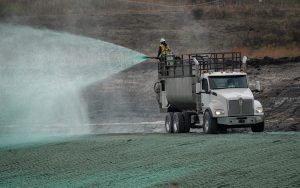
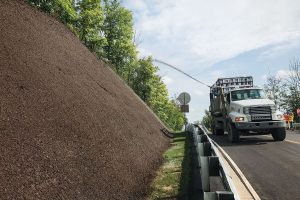
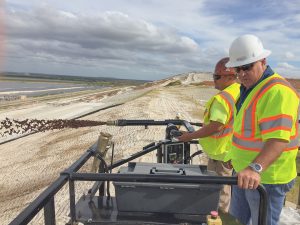
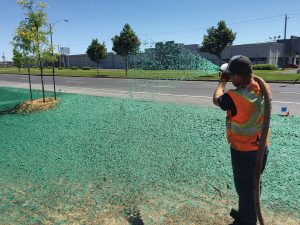
Dietz Hydroseeding used two hydroseeding machines and six crew members to cover the burned-over right-of-way. Spraying 100 to 150 feet onto the hillsides above and below the road, they created an erosion control buffer zone that would help prevent sediment runoff onto the roadway, into drainage ditches and onto adjacent properties.
Dietz coated the landscape with two applications. The first consisted of only the Hydro-Blanket, while the second included the BFM and a light mix of a variety of seeds.
The mulch was applied at 2,000 pounds per acre (1,000 per application), which, Dietz admits, was not the standard specified rate for BFM. Application rates for similar projects call for 3,000 to 4,000 pounds per acre. Dietz was confident in the product and reasoned that the lighter blanket formed by using a lower rate per acre would encourage post-fire re-growth of native species.
The Results
“The product performed incredibly,” said Dietz after accomplishing his goal of completing the job in three weeks.
The hydraulic blanket stayed intact and did its job during Southern California’s rainy season. It withstood five or six rain events, including one in early March that saw more than four inches fall in a 24-hour period.
“There was only clear-water runoff, no washouts and no loss of soil,” Dietz said. “The BFM basically glued itself along with the fine, silty material to the ground and formed a crust that held the soil in place but allowed plants to grow through it.”
Dietz feels that the decision to use additional seed and to incorporate it in the second, instead of the first application, was validated. “We decided we had to include small amounts of indigenous native seed in the mulch to ensure plant establishment,” he said, “In addition, the particular seed we were using is more light sensitive than ground temperature sensitive. So by incorporating it in the top layer of mulch, it received more exposure to the light.
“This was a very successful project when you consider the tremendous job the BFM did, the dollar per acre cost and the impact of how many acres you can protect in a short time,” he said. “Profile was extremely helpful in getting the product to us in a timely manner and gave us confidence things would work out—which they did.”